
Wastewater analysis to assess new psychoactive substances and emerging drug use trends in Kenyan cities
DOI:
https://doi.org/10.4314/ajada.v15i1.3Keywords:
Wastewater analysis (WWA), new psychoactive substances (NPS), illicit drug use, emerging drug use trends, drug surveillance, early warning system, synthetic drugs, Kenya.Abstract
According to the United Nations Office on Drugs and Crime (UNODC), an estimated 292 million people aged 15-64 used drugs in 2022. Statistics from the UNODC indicate continued growth, especially synthetic drugs. Also, the emergence of new psychoactive substances (NPS) has recorded rapid growth over the last 20 years. This study attempted to assess NPS and illicit drug use in Kenya, through wastewater analysis (WWA). The study covered the five (5) Kenyan cities where wastewater samples were collected. Each collected sample was composited with 3 grab samples at each sampling point resulting to a total of 48 wastewater samples which were subjected to laboratory analysis and identification. Analytical findings confirmed the existence of three (3) NPS namely alpha-ethyltryptamine, benzofurans and synthetic cathinones. The study also identified methamphetamine, 3, 4-methylenedioxymethamphetamine (MDMA/ ecstasy), tryptamine-based psychedelics (psilocybine and N, N-Dimethyltryptamine (DMT)), diazepam and amitriptyline as the emerging psychoactive substances. The findings demonstrate that Kenya is at risk of NPS and with an equally rapidly evolving drug landscape. The study therefore recommends for review of the current scheduling framework to provide for rapid control of NPS and emerging psychoactive substances. Secondly, there is need for establishment of an Early Warning System (EWS) to inform timely and coordinated response to mitigate emerging threats of NPS and emerging psychoactive substances. Finally, the Pharmacy and Poisons Board needs to strengthen the pharmaceutical regulation and prescription monitoring to mitigate diversion and misuse of these drugs as alternative psychoactive substances.
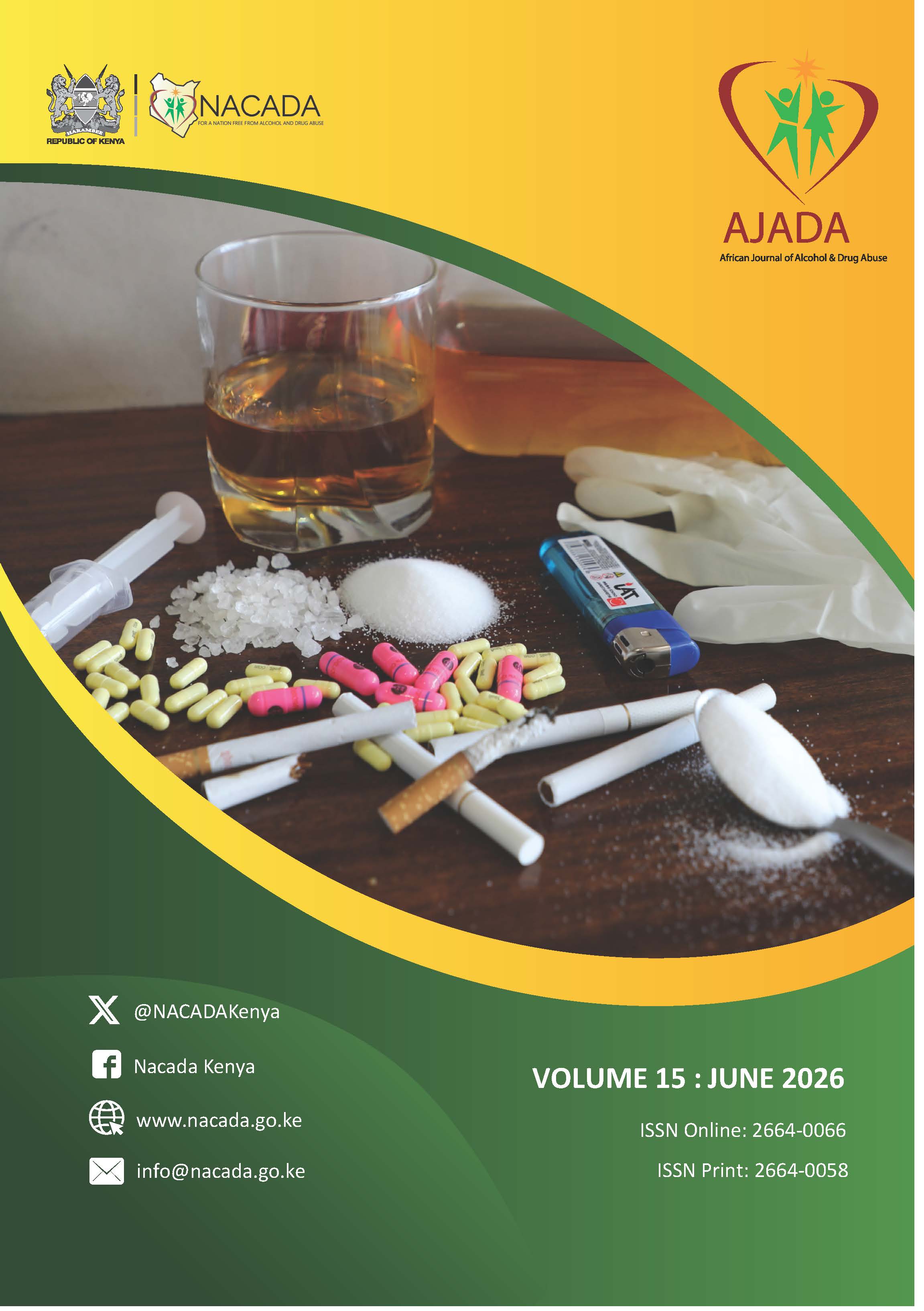
Downloads
Published
Issue
Section
License
Copyright (c) 2026 Morris Kamenderi, Lawrence Kinyua, Christine Matindi, Job Kandie, Leonard Kirui, Michael Wellimo, Susan Ngugi, Samuel Gachuhi, Stephen Kimani, Gideon Keter, Timothy Lemiso

This work is licensed under a Creative Commons Attribution-NonCommercial-ShareAlike 4.0 International License.